Ice Wine Explained: Canada's Signature Dessert Wine (and How to Serve It)
Few wines are as Canadian as ice wine. It's sweet, golden and a little bit of a miracle: grapes left hanging on the vine well into winter, picked in the dark on bitterly cold nights and pressed while they're still frozen solid. If you've ever been handed a small glass of it after a holiday dinner and wondered what you were drinking, this guide explains how ice wine is made, what the Canadian rules say, how it tastes, and how to serve, pair and store it at home in St. Albert.
What is ice wine?
Ice wine (usually spelled icewine on Canadian labels) is a dessert wine made from grapes that freeze naturally on the vine. When the temperature drops far enough, the water inside each grape turns to ice, but the sugars, acids and flavours don't. Press those frozen grapes and only a few drops of thick, very sweet juice come out. That concentrated juice ferments slowly into a wine that's rich and luscious but still lively, thanks to its natural acidity.
The style started in Germany, where it's called Eiswein, but Canada's cold winters make it one of the world's best-known icewine countries. Most Canadian icewine comes from Ontario, especially the Niagara Peninsula, and from British Columbia's Okanagan Valley.
Because each grape gives so little juice, icewine is usually sold in slim half-size bottles. The harvest is also risky: grapes left on the vine can be eaten by birds, damaged by weather or lost if a cold-enough night never comes. That's a big part of why icewine costs more than most table wines.
How Canadian icewine is made (and what the rules say)
In Canada, "icewine" isn't just a marketing word. The wine authorities in Ontario and British Columbia set strict production standards for VQA icewine. According to Ontario's VQA regulation and BC's Wines of Marked Quality Regulation:
- Frozen on the vine, naturally. Grapes must freeze on the vine and be picked while the air temperature is −8°C or colder, then pressed right away in a continuous process while still frozen.
- Very sweet juice. Each pressing must reach at least 32° Brix (a measure of sugar), and the juice used must average at least 35° Brix.
- No shortcuts. Artificially freezing or concentrating the grapes, juice or wine to boost the sugar isn't allowed, and the sweetness and alcohol must come only from the grapes' own sugar.
- Lots of natural sugar. The finished wine must have at least 100 grams of residual sugar per litre.
- Approved grapes. Icewine is made from Vidal or from vinifera grapes such as Riesling and Cabernet Franc.
Picking usually waits until the first deep cold snap of winter, often in December or January, and crews tend to work at night or in the early morning when it's coldest. The BC Wine Authority notes that every BC icewine must also pass a taste assessment before it can be sold as icewine.
What does ice wine taste like?
Expect a sweet, full-bodied wine with bright acidity that keeps it from tasting syrupy. The main styles you'll see:
| Style | Typical flavours | Good to know |
|---|---|---|
| Vidal icewine | Honey, apricot, peach, tropical fruit | The most common Canadian icewine; rich and generous |
| Riesling icewine | Citrus, lime, honey, a floral note | Often a little crisper and more delicate |
| Red icewine (often Cabernet Franc) | Strawberry, red berries, rhubarb, candied fruit | Pink to light red; lovely with chocolate and berries |
| Sparkling icewine | Fruit and honey with bubbles | Festive; great for a holiday toast |
If you're new to sweet wines, our guide to picking a wine you like explains how sweetness, acidity and body fit together.
How to serve ice wine
A few simple habits make a big difference:
- Chill it. Put the bottle in the fridge for a few hours, then take it out about 10 minutes before pouring. Served too cold, the flavours go quiet; too warm, it can taste heavy.
- Use a small glass. A small white wine glass or a tulip-shaped dessert glass is ideal. You don't need a special "ice wine glass", but a narrower bowl helps hold the aromas.
- Pour small. About 2 to 3 oz (60 to 90 ml) per person is plenty. A half-size bottle serves four to six people a tasting-size pour.
- Sip slowly. Icewine is made for lingering at the end of a meal, not for drinking quickly.
Ice wine food pairings
The golden rule of dessert wine: the wine should be sweeter than the dessert. Otherwise the wine can taste thin and sour. Some pairings that work well:
- Fruit desserts: apple or pear tarts, peach cobbler, poached pears and fruit crumbles.
- Creamy desserts: cheesecake, crème brûlée and panna cotta.
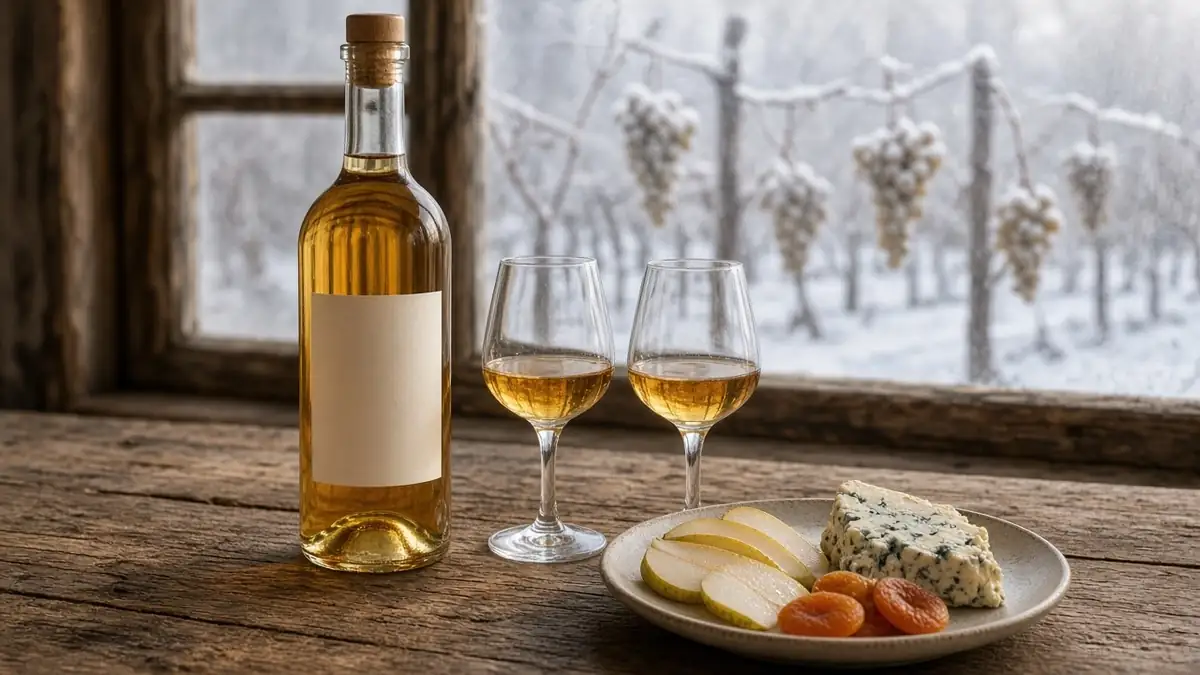
- Cheese: salty blue cheese, aged cheddar and other strong cheeses are classic partners. A cheese board with dried apricots, figs and nuts is an easy holiday dessert.
- Red icewine and chocolate: dark chocolate and berry desserts suit red icewine's red-fruit flavours.
- Savoury starters: rich pâté is a traditional match.
Hosting a holiday dinner? Our guide to what wine goes with turkey covers the main course, and a small glass of icewine makes a natural finish.
Does ice wine go bad?
Unopened, store icewine like any other wine: lying down or upright in a cool, dark place, away from heat and light. Its sugar and acidity help it age well, though most people enjoy it within a few years of buying it.
Once opened, recork it tightly and keep it in the fridge. Thanks to all that sugar, it usually keeps longer than an open bottle of table wine, often several days to about a week. If it starts to smell flat, sour or vinegary, it's time to let it go. Our wine guide has more tips on storing opened bottles.
Ice wine as a holiday gift
With the holidays coming, icewine is one of the easiest gifts to get right. It's distinctly Canadian, it looks elegant, and it suits hosts, coworkers, teachers and anyone with a sweet tooth. To make it feel more personal, add a note on how it's made, a couple of small dessert glasses or a wedge of good cheese. For more ideas, see our liquor gift ideas, our sparkling wine guide if you need bubbles for a toast, and the gift guide.
As always, enjoy it responsibly. Gift alcohol only to adults 18 and older, and if you're serving icewine at a party, have good alcohol-free options on the table and plan a safe ride home for everyone.
Find a dessert wine in St. Albert
Looking for icewine or another dessert wine for a holiday dinner or a gift? Visit our wine store at City Liquor, 260-525 St Albert Trail in St. Albert. Selection changes, so ask our staff what's on the shelf, and if you're after something we don't usually carry, ask us about a special order. We're open 10 AM to 10 PM Sunday to Thursday and 10 AM to midnight on Friday and Saturday. Call us at (825) 223-8787 or just come by.
FAQ
What is ice wine?
Ice wine (often written icewine in Canada) is a sweet dessert wine made from grapes left to freeze naturally on the vine, then picked and pressed while still frozen. Because the water in the grapes is frozen, only a small amount of very sweet, concentrated juice comes out, which gives icewine its rich, honeyed taste.
How cold does it have to be to make icewine in Canada?
Under the VQA rules in both Ontario and British Columbia, icewine grapes must freeze naturally on the vine and be picked while the air temperature is −8°C or colder. The juice must reach at least 35° Brix on average, and freezing the grapes or juice artificially to concentrate the sugar isn't allowed.
How do you drink ice wine?
Serve it chilled, in a small white wine or dessert wine glass, and pour small amounts, about 2 to 3 oz (60 to 90 ml) per person. Sip it slowly on its own, with dessert or with cheese. It's rich and sweet, so a little goes a long way.
Does ice wine go bad after opening?
Once opened, recork it and keep it in the fridge. Its high sugar helps it keep longer than most table wines, and many people enjoy it over several days to about a week. If it smells flat, sour or vinegary, it's past its best.
What goes well with ice wine?
Pick desserts that are less sweet than the wine, such as fruit tarts, cheesecake, crème brûlée or poached pears. It's also classic with salty or strong cheeses like blue cheese and aged cheddar, and with dried fruit and nuts.
Is ice wine a good gift?
Yes. It's a distinctly Canadian wine, it often comes in a slim half-size bottle, and it suits holiday dinners, hostess gifts and thank-yous. Pair it with a card about how it's made, or a small cheese plate, to make it feel special.
Please enjoy responsibly. You must be 18+ to buy alcohol in Alberta, and if you're drinking, plan a safe ride home.